Fast Business Funding in Boise, Idaho: Semiconductors, the Foothills Economy & Main Street Capital (2026)
Boise pairs a global semiconductor headquarters with a fast-growing Main Street economy. Here is how business funding actually works in the Treasure Valley in 2026: the product map by business type, real timelines, and how to compare offers.
Need funding fast? Apply in about 2 minutes — get a decision within hours, with no hard credit pull for pre-approval.
Apply Now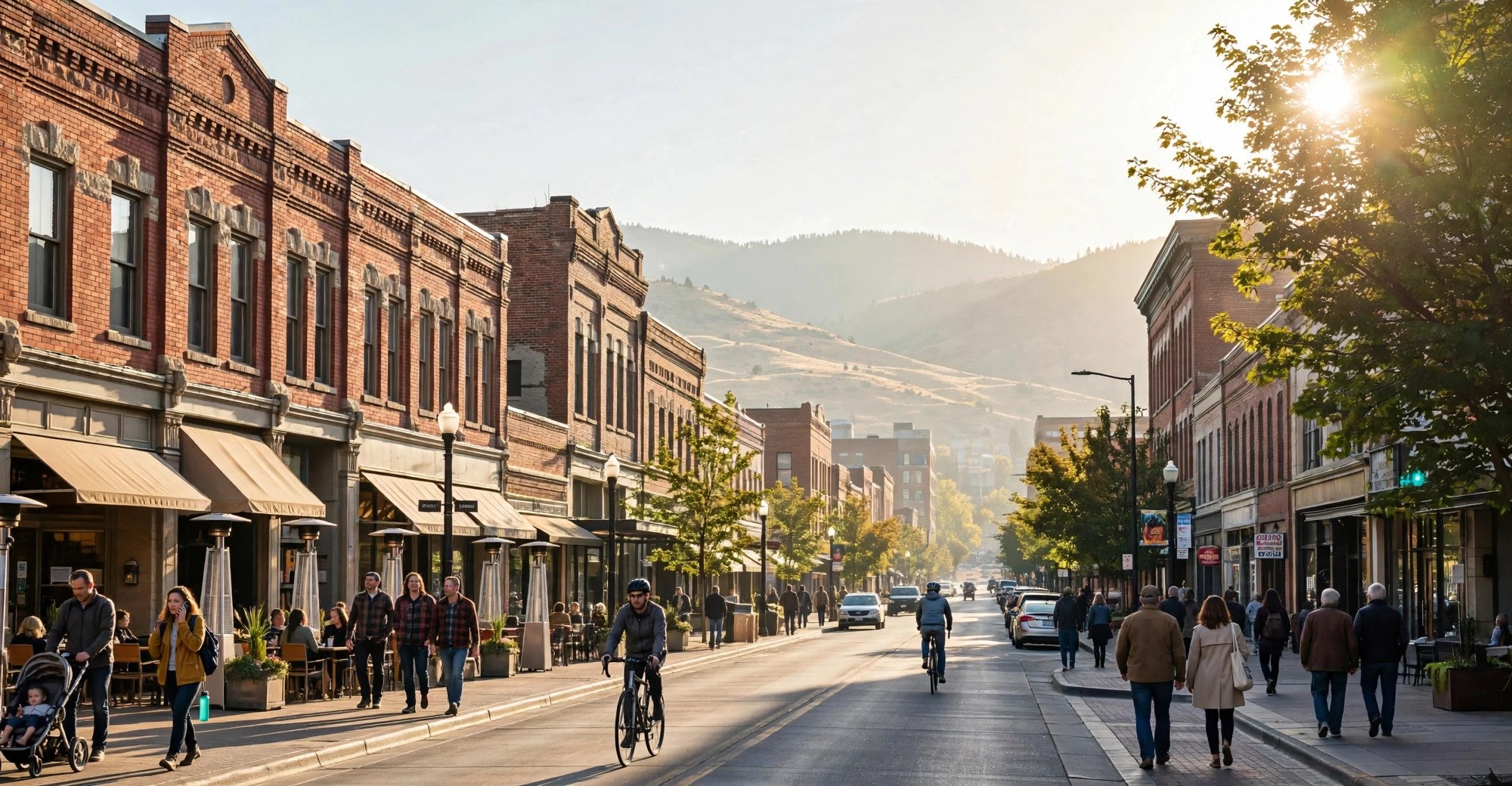
Key Takeaways
- Boise's economy runs on three engines at once: semiconductors, services, and agriculture — and each one borrows differently, on a different calendar.
- The semiconductor supply chain around Micron's headquarters creates steady contract and services demand for machine shops, logistics firms, and business services across the valley.
- Downtown and 8th Street businesses borrow on seasonal and event-driven calendars: summer foot traffic, Boise State weekends, and the winter holidays each create a different cash gap.
- Fast funding in Boise means 24 to 72 hours to money in hand for revenue-based products: a short application, a same-day decision, and three months of business bank statements. Photo ID and a voided check are optional verification items, never upfront requirements.
Why Boise borrows differently
Most state capitals borrow like government towns. Boise does not. Micron Technology has been headquartered here since 1978, and its campus and supply chain anchor a technology and manufacturing economy that reaches far beyond one employer: machine shops, component suppliers, logistics firms, and business services all sell into that orbit. Layer Boise State University on top — a major employer and talent pipeline in its own right — and the city has an economic base that most cities its size would envy.
Then there is the other Boise: downtown restaurants and bars along 8th Street, retailers and salons across the Bench and the North End, breweries and food businesses, and the farms and food processors of the Treasure Valley that feed the region. These businesses do not borrow against purchase orders or contracts. They borrow against seasons, weekends, and cash flow that arrives in waves — and the funding product that fits a machine shop with a signed contract is not the product that fits a restaurant heading into its busiest quarter.
The Boise product map: what fits which business
Semiconductor suppliers, machine shops, and logistics firms: contract-driven revenue with lumpy receivables. A business line of credit bridges the gap between delivering work and getting paid, and equipment financing fits the CNC machine or truck that the contract requires.
Restaurants, bars, and downtown retailers: daily and weekly revenue with sharp seasonal swings. A revenue-based advance matches repayment to daily sales, and a line of credit covers the pre-season inventory and staffing build.
Contractors and trades serving the building boom: project-based revenue paid on milestones. Short-term advances bridge material purchases, while invoice factoring turns slow-paying commercial invoices into usable cash.
Farms and food processors across the Treasure Valley: harvest and processing calendars that concentrate revenue in part of the year. Seasonal working capital, sized to the harvest window and repaid from it, beats year-round debt for a part-year need.
Professional services, clinics, and Boise State-area businesses: steady monthly revenue with growth needs — a second location, new hires, new equipment. Term loans fit the fixed investment; a line covers the float between billing and collection.
What Boise lenders check on a local file
The file that wins in Boise looks like the file that wins anywhere, with two local twists. First, lenders weight contracted and recurring revenue heavily for supply-chain and services firms — a signed vendor agreement or retainer base is worth more than a single big month. Second, seasonal businesses should show the full year, not the best quarter: a restaurant that only shows summer statements looks stronger than it is, and a lender that discovers the winter dip later will price for it anyway. Show all twelve months, explain the seasonality yourself, and the offer usually improves.
The core document is the same everywhere: three months of business bank statements. Lenders read them for deposit consistency, average balances, overdrafts, and existing advances. Clean statements and a short, honest explanation of any dip beat a polished pitch every time.
The five funding mistakes Boise owners make
1. Borrowing for the busy season with a product priced for the slow season. A fixed daily debit taken in January still debits in February. Match repayment to the revenue calendar, not to the month you signed.
2. Funding a permanent expansion with a short-term advance. A second location or a major build-out needs term financing. An advance used for a multi-year bet has to be refinanced before it is repaid — and refinancing under pressure is where costs compound.
3. Stacking advances to cover a slow quarter. A second advance to pay the first is the fastest path to a debt spiral, and seasonal businesses are the most tempted. Consolidate or refinance before stacking, not after.
4. Ignoring the total dollars. Compare offers on total repayment in dollars, including every fee — not on the rate, the factor, or the monthly payment alone. The cheapest offer on paper is often not the cheapest in dollars.
5. Waiting until the cash crisis to apply. Applications filed from strength — steady deposits, no overdrafts, a clear use of funds — get better terms than applications filed from desperation. Apply before the gap, not during it.
2026 timelines: what actually happens after you apply
For revenue-based products, the realistic Boise timeline is a same-day decision from a complete application and money in hand in 24 to 72 hours. Term loans and SBA-backed loans take longer — days to weeks of underwriting, with tax returns and financials in the file. Equipment financing usually lands between the two: the asset secures the loan, which speeds the decision. Whatever the product, the timeline starts when the file is complete, and the most common delay is not underwriting — it is a missing statement or an unsigned page. Gather three months of statements before you start, and the clock runs from day one.
Boise's economy has been compounding for decades — from a semiconductor headquarters to a downtown that draws a region, with farms and factories in between. The businesses that borrow well here are the ones that treat funding as a calendar decision, not a desperation one. Get the statements ready, compare total dollars, match the product to the revenue calendar, and let the written numbers decide.
Boise business? Get funded in 24–72 hours.
One application, competing offers, total cost in writing. Bank statements are the main document — gather three months before you start.
Apply Now or call (352) 809-3201
Ready to Get Funded?
Apply now and get a funding decision within hours. No hard credit pull for pre-approval — see your options risk-free.