Fast Business Funding in Kansas City, Missouri: Logistics, Barbecue & Main Street Capital (2026)
Kansas City sits on a two-state metro where freight, healthcare, and barbecue-fueled hospitality meet a fast-growing Main Street. Here is how business funding actually works in KC in 2026: the product map by business type, real timelines, and how to compare offers.
Need funding fast? Apply in about 2 minutes — get a decision within hours, with no hard credit pull for pre-approval.
Apply Now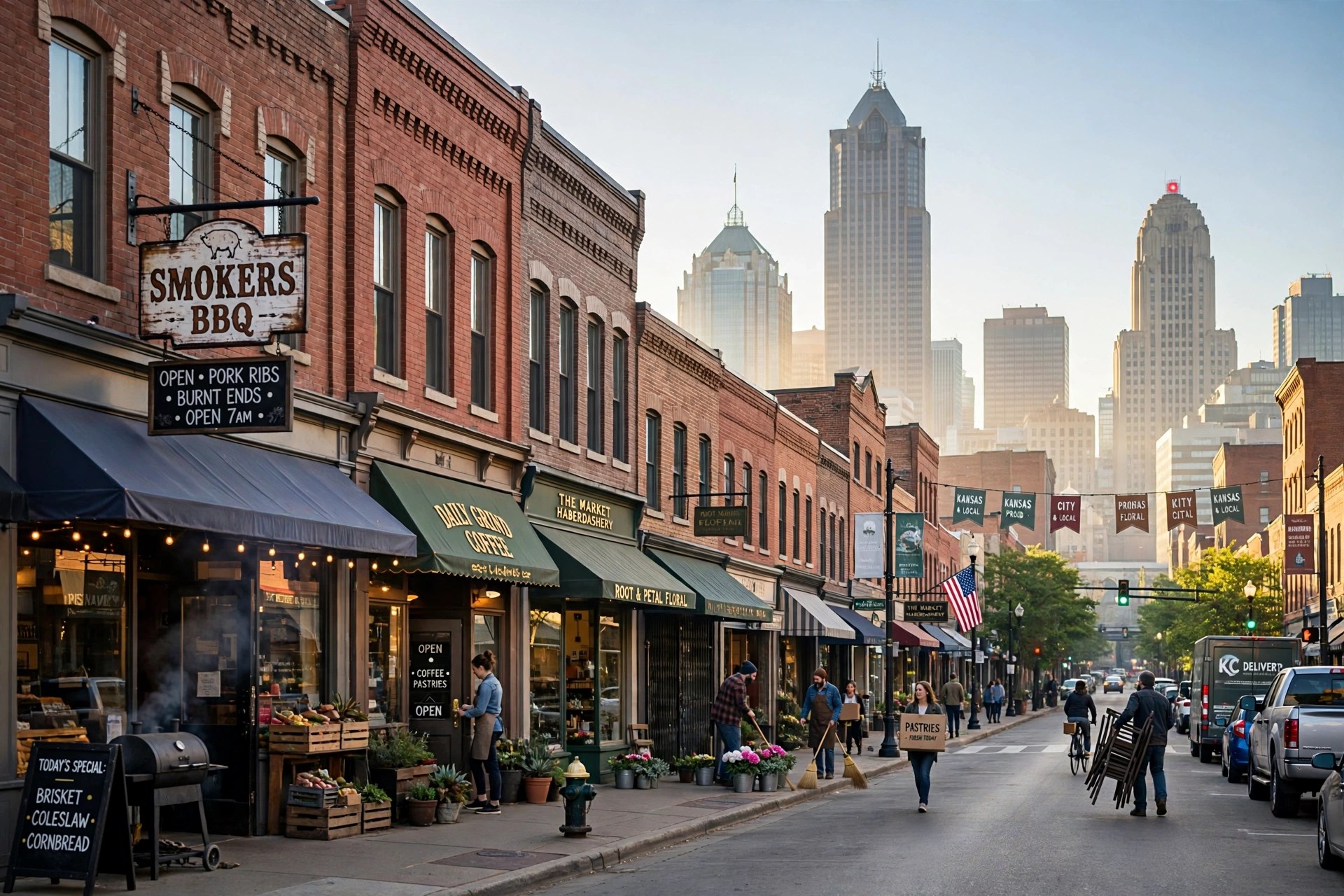
Key Takeaways
- Kansas City's economy runs on three engines at once: freight and logistics, healthcare and technology, and hospitality and Main Street services — and each one borrows differently, on a different calendar.
- The metro sits at the intersection of three interstates and two Class I railroads, so trucking, warehousing, and distribution companies borrow against contracts, fuel costs, and equipment cycles.
- Barbecue joints, breweries, hotels, and Crossroads and River Market businesses borrow on event and season-driven calendars: Chiefs and Royals home games, conventions, summer tourism, and the winter holidays each create a different cash gap.
- Fast funding in Kansas City means 24 to 72 hours to money in hand for revenue-based products: a short application, a same-day decision, and three months of business bank statements. Photo ID and a voided check are optional verification items, never upfront requirements.
Why Kansas City borrows differently
Most mid-size cities borrow like one economy. Kansas City does not. The metro is one of the largest rail centers in the country, with freight moving through Kansas City Southern, BNSF, and Union Pacific yards, plus a growing warehouse and distribution belt along I-35, I-70, and US-71. That logistics base supports trucking companies, 3PLs, packaging firms, and light manufacturers whose revenue arrives on contract schedules and whose biggest costs — fuel, drivers, and equipment — never wait for an invoice to clear.
Layer healthcare and technology on top: the metro's hospital systems and the Cerner-now-Oracle health campus make healthcare services and health-tech vendors a major employer, and the animal health corridor around Kansas City supports veterinary, pharmaceutical, and research companies. Then there is the other Kansas City: barbecue restaurants and breweries in the Crossroads and Westport, hotels and event venues downtown, retailers on the Country Club Plaza, and neighborhood services on both the Missouri and Kansas sides. These businesses do not borrow against contracts. They borrow against game days, conventions, and cash flow that arrives in waves — and the funding product that fits a trucking company with signed freight contracts is not the product that fits a restaurant heading into playoff weekend.
The Kansas City product map: what fits which business
Trucking, warehousing, and distribution companies: contract-driven revenue with lumpy receivables and constant equipment needs. A business line of credit bridges the gap between hauling a load and getting paid, and equipment financing fits the truck, trailer, or forklift the contract requires.
Restaurants, breweries, bars, and hospitality businesses: daily and weekly revenue with sharp event-driven swings. A revenue-based advance matches repayment to daily sales, and a line of credit covers the pre-season inventory and staffing build before a big weekend.
Healthcare services, clinics, and veterinary practices: steady patient and client revenue with insurance and reimbursement delays. A term loan fits a build-out or equipment purchase, and a line of credit smooths the gap between treating patients and collecting payment.
Contractors, trades, and home services: project-based revenue with material costs paid upfront. A line of credit floats materials and payroll between project milestones, and equipment financing fits the truck or machine the next job requires.
Retailers, Plaza boutiques, and neighborhood services: seasonal revenue with inventory peaks. A revenue-based advance covers a holiday inventory buy, and a line of credit handles the slower months without daily debits.
What lenders check on a Kansas City file
Every funder starts with the same three months of business bank statements. What they look for on a Kansas City file is specific to how the city earns money. For a logistics company, underwriters want to see contracted revenue and steady deposit patterns, not just one big month. A trucking company that landed a new dedicated lane should show the contract or rate confirmation alongside the statements, because the file is judged on where revenue is going, not only where it has been.
For hospitality and retail, lenders look at full-year seasonality. A barbecue restaurant that does twice its normal volume during football season will not be judged on a January bank statement alone, and a hotel near the convention center should expect questions about event calendars and advance bookings. The strongest Kansas City files show all twelve months, explain the peaks and the troughs in one sentence each, and never hide a slow month — underwriters find it anyway, and a file that explains itself gets better terms than a file that makes them guess.
Two Kansas City specifics matter more than most borrowers expect. First, the two-state metro means some businesses bank, operate, and file taxes across Missouri and Kansas; keep the business entity, the bank account, and the application address consistent, because mismatches slow underwriting. Second, businesses tied to sports and events should document their event-driven revenue rather than letting a funder average it away: a catering company with signed game-day contracts is a different risk than one hoping for walk-in traffic.
Five funding mistakes Kansas City businesses keep making
1. Borrowing against a single great month. A restaurant that had a record playoff weekend and borrows as if every weekend looks like that will struggle when the season ends. Size the advance on average monthly revenue, not the peak.
2. Taking a daily-debit advance for a seasonal gap. Daily debits do not care that January is slow. If the gap is seasonal — a slow quarter, a pre-season build — a line of credit that you draw and repay fits better than an advance that debits every business day.
3. Ignoring the total repayment in dollars. A factor rate sounds small until you multiply it. On any offer, ask for the total amount you will repay in dollars, the payment schedule, and the number of payments — then compare offers on those three numbers, not on the headline rate.
4. Stacking a second advance on top of the first. Two daily debits on the same revenue stream is how healthy Kansas City businesses end up in trouble. If an existing advance is straining cash flow, refinance or consolidate before adding another position.
5. Waiting until the truck breaks or the walk-in cooler dies. Emergency borrowing is the most expensive borrowing. A line of credit opened while revenue is healthy costs nothing until you draw it, and it turns a breakdown from a crisis into a repair bill.
2026 timelines: how fast money actually moves
Revenue-based advances and lines of credit from online funders typically move in 24 to 72 hours from a complete application: apply, send three months of bank statements, get a decision the same day or the next, and see funds the following business day. Equipment financing for a truck or commercial kitchen build takes longer — usually a few days to two weeks, depending on the vendor and the title work. SBA-backed loans for a larger expansion or a real estate purchase run four to eight weeks, and they are worth it only when the project justifies the wait.
The fastest files in Kansas City share three traits: statements that match the application exactly, a one-paragraph explanation of any unusual deposit, and a borrower who answers the phone when underwriting calls. The slowest files are not slow because of the funder — they are slow because a statement is missing, a deposit is unexplained, or the business address on the application does not match the bank account.
How to compare offers before you sign
Put every offer on the same one-page checklist before you accept anything. Write down the funded amount, the total repayment in dollars, the payment amount and frequency, the number of payments, any origination or servicing fees, and whether there is a prepayment discount. Then ask three questions: Does the payment fit on a slow week, not just an average week? What happens if revenue drops for a month — is there a reconciliation process? And what is the total cost of this money compared with the next-cheapest offer on the table?
That last question is the one that saves Kansas City borrowers real money. A slightly slower product with a lower total cost beats a same-day advance when the need is not actually an emergency, and a line of credit you can reuse beats a one-time advance when the gap will come back next season. Speed matters — but only after the math checks out.
Funding a Kansas City business? Get a real offer, not a teaser rate.
Apply in about two minutes with three months of bank statements. A funding advisor will walk through your actual numbers — average revenue, seasonality, and total repayment in dollars — before you commit to anything.
Apply Now or call (352) 809-3201
Ready to Get Funded?
Apply now and get a funding decision within hours. No hard credit pull for pre-approval — see your options risk-free.