Fast Business Funding in Laredo, TX: The $353.9 Billion Port, 17,000 Trucks a Day & a $63,915 Median Income (2026)
Laredo moves more trade than any other U.S. port: $353.94 billion crossed its bridges in 2025 — 39.41% of all U.S.–Mexico trade — with roughly 17,000 commercial trucks a day at the World Trade Bridge. Webb County counts 1,579 transportation and warehousing establishments, and the metro held 116,000 jobs in September 2026 at 4.1 percent unemployment. The city held 269,515 people on July 1, 2025, with a median household income of $63,915. Here is how business funding actually works in the Laredo market: the product map by business type, real timelines, the public programs that exist, and how to compare offers.
Need funding fast? Apply in about 2 minutes — get a decision within hours, with no hard credit pull for pre-approval.
Apply Now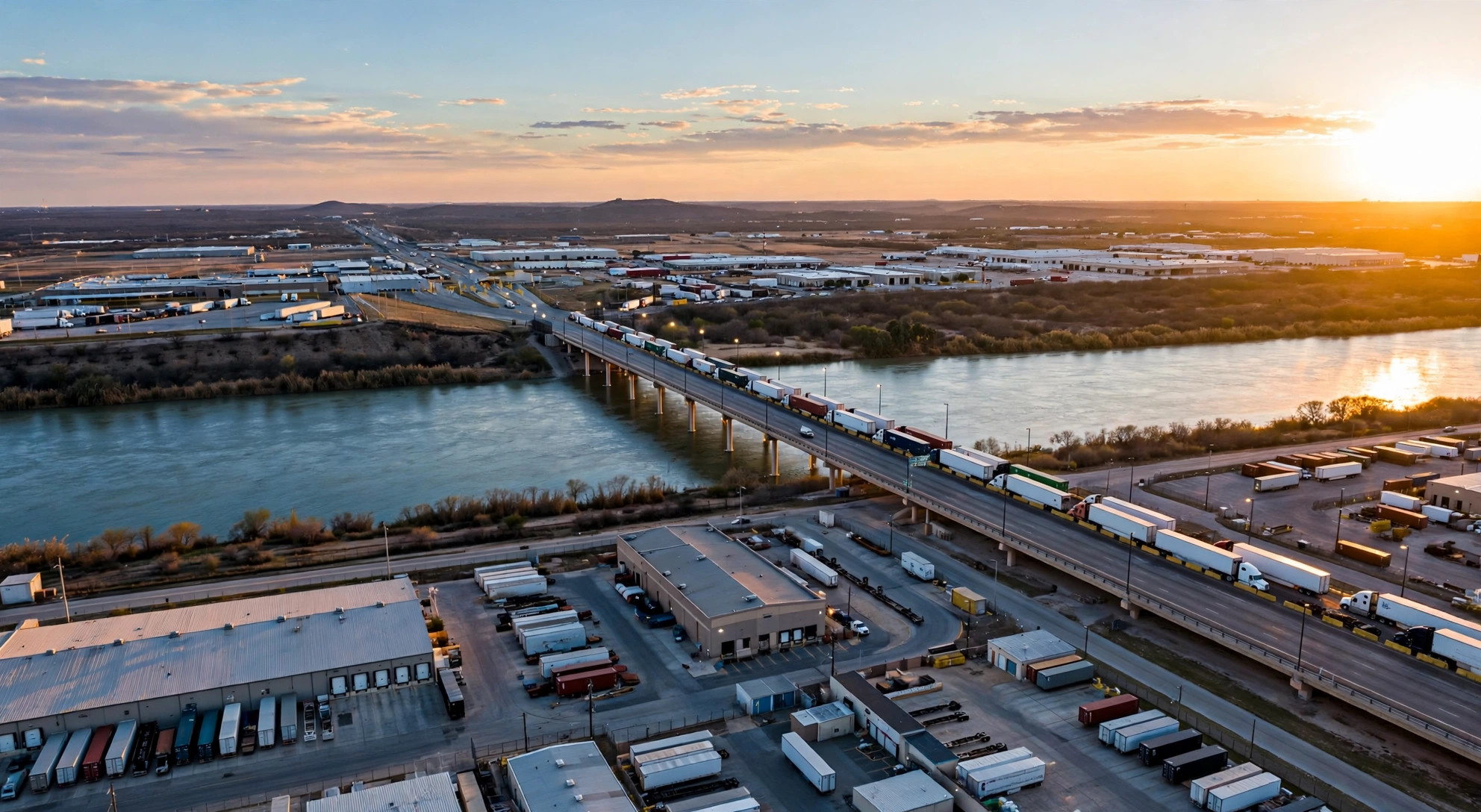
Key Takeaways
- Laredo is the busiest U.S. port by trade value, and it is not close. Port Laredo handled $353.94 billion in 2025 — its fifth straight record year, up 4.4 percent — including $296.2 billion of truck trade with Mexico, 46.1 percent of all U.S.–Mexico truck trade. Trade, transportation, and utilities is the metro's largest sector at 36,300 jobs, about 31 percent of all nonfarm employment.
- The economy runs on trucks, warehouses, and the border. Webb County counts 1,579 transportation and warehousing establishments employing 17,580 people, plus 761 retailers and 475 accommodation and food services establishments. Local general-freight trucking is the most over-represented industry in the metro relative to the U.S. — 56.1 establishments per 100,000 residents against 13.6 nationally.
- Laredo held 269,515 people on July 1, 2025, per the Census Bureau's Vintage 2025 estimates, up 5.6 percent from the 2020 base. Median household income is $63,915, the metro counted 116,000 nonfarm jobs in September 2026, and unemployment was 4.1 percent. The city is about 96 percent of Webb County's 281,224 residents.
- Revenue here is seasonal in a very specific way. Laredo cleared 74,319 truckloads of Mexican fresh produce in 2025, and monthly produce volume halved from March 2026 (7,685 truckloads) to August 2026 (3,768) as avocado and berry seasons eased — a documented swing that hits trucking, warehousing, and cold-storage cash flow directly.
- The cheapest money in Laredo is public and specific: SBA 7(a) loans run to $5 million, 504 loans to $5 million for owner-occupied real estate and long-life equipment, and microloans to $50,000 — and the Small Business Development Center network offers free one-on-one advising that costs nothing and makes a file fundable faster. Texas has no state income tax, which is one reason logistics firms keep building here.
Why Laredo borrows differently
Most American cities have one economy. Laredo has one economy too, but it is a corridor: everything in it exists to move goods between Mexico and the United States. Port Laredo handled $353.94 billion of trade in 2025, its fifth consecutive record year, and about 39.41 percent of all U.S.–Mexico trade moves through this one city. Truck trade alone was $296.2 billion — 46.1 percent of all U.S.–Mexico truck trade value. The World Trade Bridge, the commercial-freight-only crossing opened in 2000, handles roughly 17,000 commercial trucks a day, and a second CPKC rail bridge opened in February 2025 at a cost of about $100 million, doubling cross-border rail capacity at North America's busiest rail border crossing.
That corridor is the whole business base. Trade, transportation, and utilities employs 36,300 people in the metro — about 31 percent of all nonfarm jobs — ahead of government at 25,600 and education and health services at 19,500. Webb County's 1,579 transportation and warehousing establishments run $898.2 million of payroll, and the city's own transportation and warehousing receipts were $5.397 billion in the 2022 Economic Census. Around the corridor sit the businesses that feed it: customs brokerages and freight forwarders, warehouses and cold storage, truck repair and fuel, retailers serving cross-border shoppers ($4.759 billion in city retail sales in 2022), restaurants (200 limited-service and 154 full-service establishments in the metro), and construction firms building the industrial parks — Laredo permitted $731.5 million of warehouse construction in 2025 alone.
One thing to get straight before you borrow on a Laredo address: this is a trade town, and trade moves with policy. Tariff threats in November 2026 slowed decisions to build new plants in Mexico — and new plants in Mexico are what fill warehouses in Laredo. Warehouse permitting fell 87 percent through September 2026 versus all of 2025, and industrial vacancy rose from under 2 percent in 2021–2023 to about 11.5 percent in early 2026, per a November 2026 analysis. None of that makes Laredo a bad market to fund in — the port set its fifth straight trade record in 2025 — but it means a funder that prices your file on one slow month alone will quote you like a failing business. A file that shows twelve months of deposits, the seasonal pattern, and the explanation for the slow month gets priced like the business it is.
The Laredo funding map: which product fits which business
Funding is not one product. The right one depends on what the money is for, how fast it comes back, and what your revenue looks like month to month. Here is the map for Laredo:
Merchant cash advance — for card-heavy businesses with a short-term gap. Restaurants, retailers, and hospitality firms along San Bernardo Avenue and in the outlet centers with steady card sales borrow against future receipts and repay daily or weekly as a share of sales. A $50,000 advance at an illustrative 1.20 factor rate repays $60,000 in total — $10,000 of cost — or about $2,308 a week over 26 weeks. The advance is fast, usually funded in 24 to 72 hours, and it fits a payroll gap or an inventory buy that pays back in a season. It is the most expensive money on this map, and it is the right call only when the money comes back within months. Read what actually happens if you default on an advance before you sign one, and read whether a merchant cash advance is legal for the state-by-state picture.
Term loan — for a known cost with a fixed payoff date. A second truck for a carrier, a forklift fleet for a warehouse, a build-out for a customs brokerage, a hire that pays for itself over a year. Fixed daily, weekly, or monthly payments over months to years, priced on a rate or a factor depending on the lender. If the spend has a clear return date, match the term to it — borrowing for 12 months to pay for something that returns in three is overpaying for speed you do not need.
Business line of credit — for the seasonal business. A trucking firm waiting on the produce season, a warehouse between contracts, or a retailer between inventory buys draws only what it needs and pays interest only on what it draws. The line is the right tool when the gap is timing — a season that pays in March, a contract 60 days out — rather than a single purchase. Draws after approval are usually same-day.
Equipment financing — for the thing itself. A reefer trailer, a forklift, warehouse racking, a delivery fleet, a CNC machine. The equipment secures the loan, so the pricing is usually the cheapest money on this map for an asset purchase, and the term can run two to five years. If the money buys a thing, price the equipment product first. And if you already own the equipment outright, you can borrow against it instead — an equipment refinance or sale-leaseback turns a paid-off truck or machine into working capital without taking it out of service.
Purchase-order and invoice financing — for the contract economy. A carrier with a signed freight contract, a warehouse with outstanding invoices, or a supplier waiting on a draw can borrow against the order or the receivable instead of against future card sales. The advance is sized on the contract, not on last month's deposits, which is exactly the profile a contract business needs. Ask about it before you take a general-purpose advance.
SBA and guaranteed loans — for the cheapest money, if you can wait. SBA 7(a) loans run up to $5 million through SBA lenders, and SBA 504 loans run up to $5 million for owner-occupied real estate and long-life equipment. SBA microloans run up to $50,000. The underwriting is real and the clock runs in weeks, sometimes six to eight, but the rate is the lowest on this map. For the full comparison method, see which funding product fits which business.
Grants and loan programs: what actually exists in Laredo
Before you borrow, check the money that does not need repaying — and be honest about what is open right now. The public money that actually exists for Laredo businesses is federal and state-level, not a general city cash grant. The Small Business Development Center network offers free one-on-one consulting, business planning, and financing help, and the local SBDC serves the Laredo market. Start there before you apply anywhere else — it costs nothing and it is the fastest way to a fundable file.
The federal channel is the SBA itself: 7(a) loans to $5 million, 504 loans to $5 million for real estate and long-life equipment, and microloans to $50,000. The local SBDC can walk you through the SBA application before you file it. And if your business is in San Antonio, up I-35, the same federal programs apply — the difference is the local channel, not the federal one.
The longer-term story is infrastructure, and it is worth knowing when you plan a multi-year borrow. The World Trade Bridge is being expanded from 8 to 18 commercial lanes — a new eight-lane northbound span plus two added southbound lanes — backed by a $25 million federal BUILD grant awarded in July 2026, with construction anticipated from summer 2027. A presidential permit signed June 13, 2025 authorizes two new four-lane commercial spans at the Colombia–Solidarity Bridge. And the Gateway International Rail Park, a new rail and truck transload industrial park, cleared federal authorization in June 2026. None of that is money in your account this month — but it is the reason the corridor keeps growing, and a funder that understands the market will price your file with that in view.
One honest note about grants: grants are slow and competitive, and none of them cover payroll next Friday. Use them for the project they fit, and borrow for the gap they leave — not the other way around.
What to watch before you sign
There is no substitute for the total repayment in dollars, in writing, before you sign. Compare offers on that number, not on the headline rate or the monthly payment. If a funder will not put the total in writing, that is your answer about the funder.
The second thing to watch is the repayment rhythm. Daily debits against a trucking firm's account in the slow produce season, or against a warehouse's account between contracts, can drain the account before the next season or contract payment lands. Laredo's monthly produce volume halved from March to August 2026 — if your revenue swings like that, ask for weekly payments instead of daily, and ask what happens if a debit fails. A funder that answers clearly is a funder that has done this before.
The third is stacking. A second advance taken to cover the first one's payments is how a manageable file becomes a default. If you already hold an advance, read how to refinance one before you stack another, and read how the early-payoff discount works if you are weighing paying one off early.
Frequently asked questions
How fast can a Laredo business get funded? A merchant cash advance typically funds in 24 to 72 hours after approval with three months of bank statements. Term loans run a similar clock, lines of credit decide in minutes to a day, equipment financing takes days to a couple of weeks, and SBA loans take weeks. The public programs run slower, because they move through review rounds and partner referrals.
What do I need to apply? Three months of business bank statements are the core document. A photo ID and a voided check are usually optional verification, not requirements — but having them ready removes stalls. Trucking and warehouse firms should also bring the equipment list and the freight contracts; produce-season businesses should bring the seasonal sales pattern; customs brokerages should bring the client agreements.
Does the port help or hurt my approval chances? It helps, if the file shows it. Funders underwrite your business, not the headline. A carrier or warehouse with twelve months of deposits showing the seasonal pattern, steady contract volume, and an explanation for the slow months prices far better than a file that leaves the funder to guess. Show the full year of deposits, not just the last quarter.
Can a trucking, warehouse, or customs brokerage firm get funded in Laredo? Yes — trucking, warehousing, customs brokerage, and freight forwarding are among the most common Laredo profiles, because the port keeps freight moving most of the year. An advance fits a short-term payroll or fuel gap; a line of credit fits the seasonal business; equipment financing is usually the cheapest route for a truck, a reefer, or a forklift; and an SBA loan can fill a gap a bank will not cover on its own.
What if my revenue is seasonal? Show it, do not hide it. Laredo's produce season peaks in spring and eases by late summer — funders that work this market have seen the pattern before. Bring twelve months of statements, not three, and a one-paragraph explanation of the season. A file that explains the dip prices better than a file that leaves the funder to discover it.
Ready to fund your Laredo business?
One application, competing offers, total cost in writing. Bank statements are the main document — gather three months before you start, and bring the full twelve months if your revenue is seasonal, or the freight contract or equipment list if you are a carrier or a warehouse.
Apply Now or call (352) 809-3201
Ready to Get Funded?
Apply now and get a funding decision within hours. No hard credit pull for pre-approval — see your options risk-free.