Fast Business Funding in Tacoma, Washington: The $17.13 Floor, the Port Economy & the $20 Wage Question (2026)
Tacoma pairs the nation's highest state wage floor — $17.13 an hour — with the sixth-busiest container port in North America, no state income tax, and a $20-an-hour city wage proposal working through the council. Here is how business funding actually works in the Tacoma market: the product map by business type, real timelines, and how to compare offers.
Need funding fast? Apply in about 2 minutes — get a decision within hours, with no hard credit pull for pre-approval.
Apply Now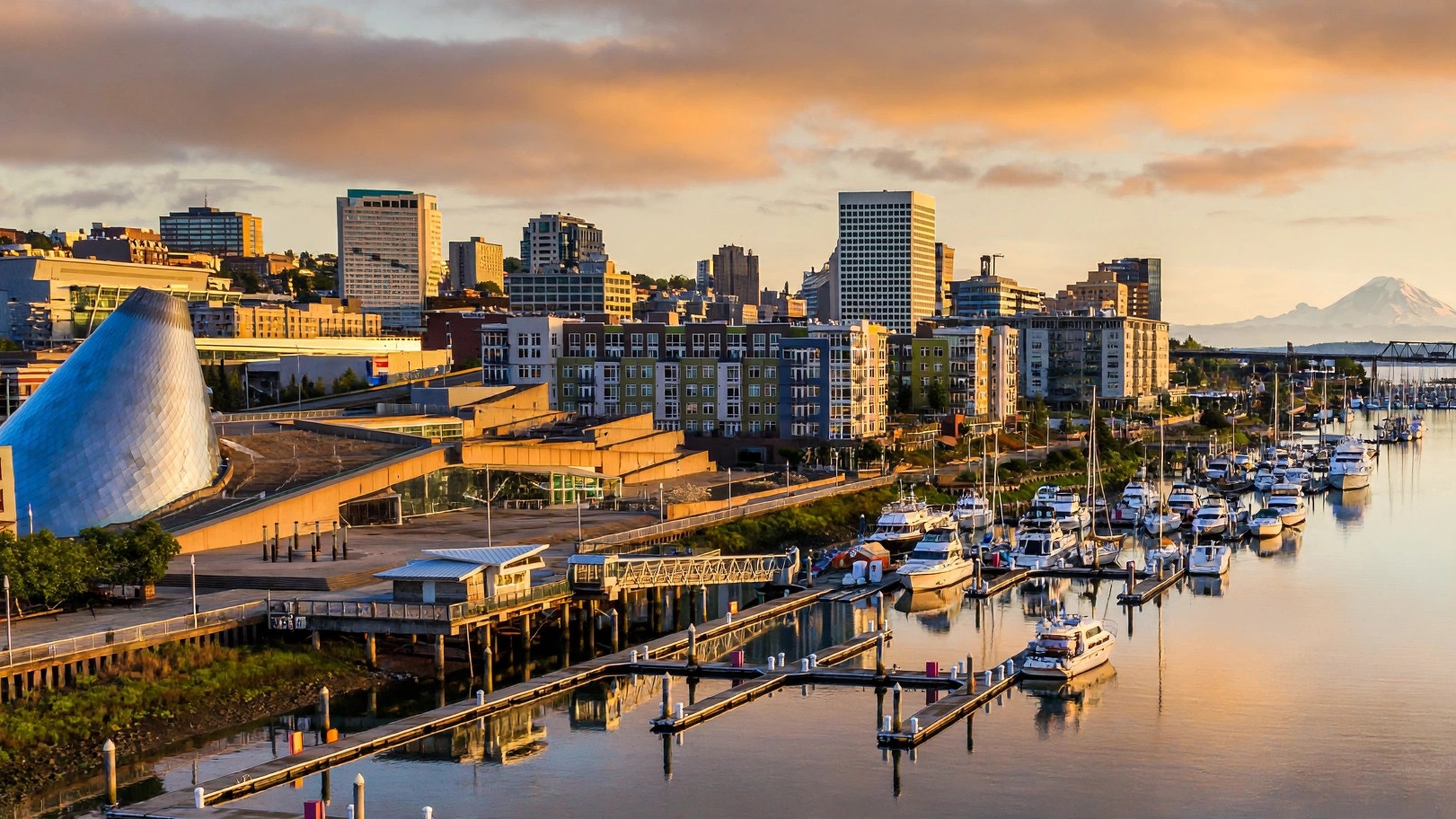
Key Takeaways
- Washington's minimum wage is $17.13 an hour in 2026, the highest statewide rate in the country, up from $16.66 in 2025 and rising to $17.73 on January 1, 2027. There is no tip credit — tipped staff earn the full $17.13 before tips. Tacoma follows the state rate; it has no separate city wage since the statewide initiative overtook Tacoma's own 2015 measure in 2020. Ten hourly staff at the floor cost roughly $6,852 a week before taxes and benefits. And the floor may move again soon: a $20-an-hour city ordinance is working through the Tacoma City Council this fall, after the ballot version failed to reach the February 2026 special election ballot.
- Tacoma is a port town first. The Port of Tacoma is the sixth-busiest container port in North America, and its marine cargo operations merged with the Port of Seattle's in 2015 to form the Northwest Seaport Alliance. The alliance handled 3.16 million TEUs in 2025, with 90.5 percent of the volume moving to and from Asia, and in 2023 its operations supported an estimated 52,100 jobs, $4.4 billion in compensation, and nearly $14 billion in business output statewide. The Port of Tacoma's own lines of business supported more than 8,000 jobs, $675 million in compensation, and nearly $2 billion in output. The port handles 9 to 13 million tons of cargo a year and more than $25 billion in commerce.
- The city passed 222,000 residents in the latest Census estimates, making it the third-largest city in Washington, and median household income is about $85,884. The Tacoma-Lakewood metro unemployment rate was 5.1 percent in September 2026, against the Seattle-Tacoma-Bellevue metro at 4.9 percent and the statewide seasonally adjusted rate of 4.8 percent. Washington levies no state income tax on individuals or businesses. The median home value is about $479,600, with median rent around $1,676 a month — cheaper than Seattle, which is why the city keeps absorbing businesses and workers priced out of the north end.
- Joint Base Lewis-McChord sits just south of the city in Lakewood, and the base, the port, and the health systems — MultiCare and Virginia Mason Franciscan — are the anchors of the local economy, alongside Tacoma Public Schools, the City of Tacoma, and the University of Washington Tacoma. A funder reading a Tacoma file is reading a business that lives next to contracted, recession-resistant revenue on one side and seasonal, trade-dependent revenue on the other, and the file has to show which side the business is on.
- Fast funding in Tacoma means 24 to 72 hours to money in hand for revenue-based products: a short application, a same-day decision, and three months of bank statements as the main document. Photo ID and a voided check are optional, not required. Term loans and equipment financing take longer — typically one to three weeks — and fit purchases with a useful life, not payroll gaps. SBA loans take 30 to 90 days.
Why Tacoma borrows differently
Tacoma is the only market in this series where the wage floor is both the story and a moving target. At $17.13 an hour, Washington has the highest statewide minimum wage in the country, and it rises every year on inflation — $17.73 is already set for January 1, 2027. A funder reading a Tacoma file is reading a business whose payroll is structurally heavier than the same business anywhere else in the series: ten hourly staff cost roughly $2,000 a week more than in Reno before a single benefit is added. That margin pressure shows up in the deposits, and a funder will check that the slow month still covers the payroll, not just the busy one.
The second difference is the $20 question. Tacoma voters approved their own $15 minimum wage in 2015, then the statewide rate overtook it in 2020 and the city wage reverted to the state rate. The $20 proposal — first as a ballot initiative that did not reach the February 2026 special election ballot after legal challenges, now as a council ordinance being developed for the fall — would add $2.87 an hour to every hourly worker on top of a floor that is already the highest in the nation. For a Tacoma business with ten hourly staff, that is about $1,150 more a week, or nearly $60,000 a year. A funder underwriting a Tacoma file in late 2026 is pricing that possibility, and a business that can show its payroll clearing at $20 an hour is a stronger file than one that only clears at $17.13.
The third difference is the port. The Northwest Seaport Alliance is one of the largest marine cargo gateways in the United States, and the Tacoma side of it moves containers, automobiles, grain, and breakbulk cargo on schedules set by Asian trade, not by the local retail calendar. The businesses that serve the port — trucking, warehousing, freight forwarding, marine services, industrial supply — have revenue that arrives in settlement cycles and contract payments, not daily card deposits. Around them sits the service economy that serves 222,000 residents and the Joint Base Lewis-McChord community: restaurants, retail, contractors, and health-care services whose revenue moves with the season and the base's rotation schedule. A logistics firm and a restaurant on Sixth Avenue can sit two miles apart and have nothing in common financially, and the file has to show the funder which Tacoma the business lives in.
The Tacoma numbers that matter to a funder
A funder underwriting a Tacoma business starts with the same file as anywhere else — three months of bank statements, the application, and a read on the revenue pattern — but the local numbers change what the file means. The Tacoma-Lakewood metro unemployment rate was 5.1 percent in September 2026, with about 25,600 people unemployed, against 4.9 percent for the Seattle-Tacoma-Bellevue metro and 4.8 percent statewide on a seasonally adjusted basis. The city passed 222,000 residents in the latest Census estimates, and median household income is about $85,884.
The sector mix is what a funder actually prices. The port and the logistics chain around it are the first pillar: the alliance's 3.16 million TEUs in 2025, the auto imports, the grain exports, and the warehouses and carriers that turn cargo into local payroll. Health care is the second, anchored by MultiCare's Tacoma General and Allenmore hospitals and Virginia Mason Franciscan's St. Joseph Medical Center, with home-health agencies and medical staffing firms as the natural funding candidates. Government and the military are the third, anchored by Joint Base Lewis-McChord just south of the city, the City of Tacoma, Tacoma Public Schools, and Pierce County. The University of Washington Tacoma and the downtown core add the fourth: education, professional services, and the restaurants, bars, and shops that serve them.
The growth numbers are steady rather than explosive. The housing market reflects it: the median home value is about $479,600 with median rent around $1,676 a month, well below Seattle, which is the city's recruiting pitch — it draws the remote workers and small firms that keep the service economy growing — and it is also the reason the wage floor bites less here than it would in Seattle, where the same $17.13 buys far less. A funder that knows Tacoma knows the payroll is heavy, the tax code is light, the port is the engine, and the housing cost is the shock absorber.
The product map: which funding fits which Tacoma business
Port logistics, trucking, and warehousing. The businesses that move the port's cargo fund best on equipment and receivables products: tractors, trailers, forklifts, and racking finance on the asset, while a line of credit covers the fuel and payroll float between settlements. Revenue-based advances fit the owner-operator with lumpy settlement deposits, but the file has to show the carrier contracts, because a funder discounts revenue that depends on a single shipper or a single terminal.
Health care and medical services. Clinics, home-health agencies, and medical staffing firms with contracted revenue from MultiCare, Virginia Mason Franciscan, or the VA fund well. Factoring or a line of credit fits receivables that pay on a 30- to 60-day cycle, and the file should lead with the contracts, not just the deposits. These are the strongest files in Tacoma.
Construction and trades. The steady population growth, the port's industrial base, and the older housing stock — with a median value near $479,600 — keep trades busy on both commercial and residential work. Project-based businesses fund best on a line of credit that flexes with the job schedule, with equipment financing for the machines that outlast any single job. The file should show the backlog, not just the deposits.
Restaurants, bars, and hospitality. The daily-deposit businesses are the natural fit for revenue-based funding: steady card deposits, a short application, a same-day decision, and money in 24 to 72 hours. The Tacoma version of the trap is the winter trough combined with the payroll floor — a restaurant that borrows against a summer month and repays through January at $17.13 an hour is borrowing against revenue that will not be there. Size to the conservative month, not the peak.
Retail and services. The city's role as the commercial hub of Pierce County means retail and service businesses with steady card volume fund well on revenue-based products, but the wage floor bites hardest here: a retailer with ten hourly staff carries a $6,852-a-week minimum payroll before benefits, and a $20 city wage would push that past $8,000. The file should show the payroll clearing comfortably in the slow month, because that is the month the funder will price.
What funders actually check in a Tacoma business
Three months of bank statements is the core of the file, and the funder reads them for pattern, not just totals. Steady deposits with a weekly rhythm read stronger than a single large month. A funder discounts revenue that depends on one customer, one contract, or one season — and Tacoma has plenty of all three, from the single-terminal trucking company to the summer-peak restaurant to the contractor whose year is one big port job. The application should show the contracts, the repeat customers, and the seasonality up front, because a funder that discovers the concentration itself will price it worse than one that is told about it.
The wage bill gets a closer look here than anywhere else in the series. At $17.13 an hour with no tip credit, the payroll is the largest fixed cost most Tacoma small businesses carry, and the rate rises every January on inflation — with a possible $20 city rate on top of it. A funder will check that the deposits cover the payroll in the slow month, including the overtime days, not just the base week. A file that shows the payroll clearing comfortably in January — and that still clears if the city rate jumps to $20 — is worth more than one that only clears in July.
The document list is short. Bank statements are required — typically the last three months — and they carry most of the decision. Tax returns and a profit-and-loss statement enter the picture for larger term loans and SBA files, but photo ID and a voided check are optional, not required. A funder that understands the Tacoma market will ask about your customer mix, your slow season, and your payroll at the January rate before quoting, because those three numbers decide which product fits. The ones that do not ask are the ones whose product will not fit.
Traps that cost Tacoma businesses real money
One: borrowing an advance to cover a payroll gap that repeats every month. If the gap is structural — revenue that arrives monthly against payroll that leaves weekly at $17.13 an hour — the advance papers over it for one cycle and the daily debit makes the next cycle worse. The fix is a line of credit sized to the payroll cycle, not a lump sum.
Two: budgeting the payroll on the current rate. Washington's minimum wage rises every January on inflation — $17.13 in 2026, $17.73 already set for 2027 — and Tacoma may add a $20 city rate on top of that. A business that budgets a full year at the current rate will be short by January, and short again if the ordinance passes. Fund the growth, not the gap, and build the January increase into the repayment plan before you sign.
Three: borrowing against a port-contract month. A logistics or marine-services business that lands a big contract month can look flush on paper, but port work is lumpy — a terminal slowdown, a tariff shift, or a lost contract can cut the next quarter in half, and the alliance's volume fell 5.5 percent in 2025. Size the advance to the average month, not the best one, and keep the contract in the file so the funder prices the concentration honestly.
FAQ
How fast can a Tacoma business get funded? Revenue-based funding decides the same business day and funds in 24 to 72 hours with a complete file: three months of statements, a consistent business name, and no undisclosed advances. Term loans and equipment financing take one to three weeks; SBA loans take 30 to 90 days.
Does Washington really have no state income tax? Yes. Washington levies no state income tax on individuals or businesses, which is a real margin advantage over an Oregon or Idaho file — but it does not change the underwriting. Funders still underwrite your deposits, your customer concentration, and your slow season. The tax edge helps you keep the money; it does not help you borrow it.
Is Tacoma really considering a $20 minimum wage? Yes. A ballot initiative for $20 an hour did not reach the February 2026 special election ballot after legal challenges, and a council ordinance raising the city wage to $20 is being developed for consideration this fall, with a ballot version aimed at November 2026. Tacoma currently follows the state rate of $17.13. A business planning a 2027 budget should model both numbers.
What if my revenue depends on one big customer? Say so up front, with the contract in the file. A funder discounts single-customer revenue, but a written contract with a port tenant, a hospital system, or a government agency is still far stronger than a handshake. The discount is smaller when the funder sees the contract before quoting than when it finds the concentration in the statements afterward.
Can I get funding with a low credit score? Revenue-based funders weight deposits far more heavily than personal credit, and many approve scores that a bank would decline. The trade-off is cost: lower scores mean higher factor rates, which is why comparing the total payback — not the monthly payment — matters more than almost anything else, because the daily debit comes out before rent, payroll, or inventory gets paid.
Apply once and compare competing offers side by side on total cost, not on speed alone — speed is table stakes in this market, and every serious funder offers it. The businesses that fund best in Tacoma are not the ones with the biggest summer. They are the ones whose statements show they survive January, at $17.13 an hour — and at $20 if the city gets its way.
Ready to fund your Tacoma business?
One application, competing offers, total cost in writing. Bank statements are the main document — gather three months before you start.
Apply Now or call (352) 809-3201
Ready to Get Funded?
Apply now and get a funding decision within hours. No hard credit pull for pre-approval — see your options risk-free.