Business Funding in Delaware: Middletown, Newark, Wilmington & Dover (2026)
Delaware businesses fund differently than businesses anywhere else — no state sales tax, no general rate cap for corporate and LLC borrowers, and four distinct city economies. Here is how funding works across the First State, city by city, plus the state and county programs worth checking before you take private funding.
Need funding fast? Apply in about 2 minutes — get a decision within hours, with no hard credit pull for pre-approval.
Apply Now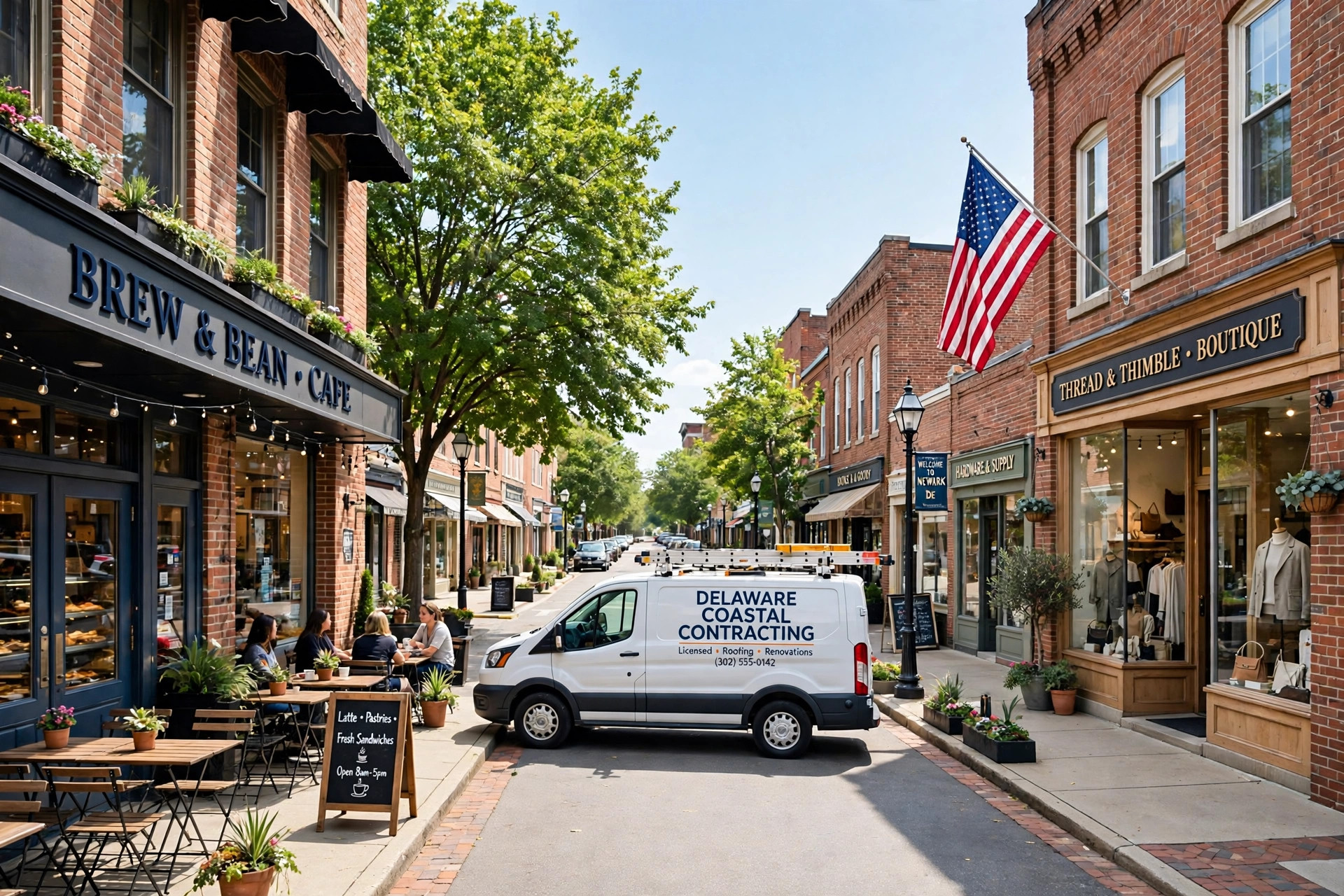
Key Takeaways
- Delaware has no state sales tax and no general rate cap for corporate and LLC borrowers — two facts that shape every funding decision in the state.
- We fund businesses in Middletown, Newark, Wilmington, and Dover — plus the MOT area (Middletown, Odessa, Townsend) and nearby New Castle County communities.
- Private funding typically lands in 24–72 hours; state and county programs are cheaper but competitive and slow — check them first, then fund privately without waiting.
- The one document every funder requires is your last 3 months of business bank statements. A photo ID and a voided check are optional verification on some products, never an upfront requirement.
Delaware funding at a glance
Delaware is the second-smallest state in the country, and that is an advantage for borrowers: a funder network that covers the whole state beats a single-city lender every time. The same application reaches funders who know Middletown's growth corridor, Newark's Main Street seasonality, Wilmington's Riverfront economy, and Dover's capital-city and military-town mix — and the offer you take is the best of that market, not the only one you were shown.
Two statewide facts matter more than any single lender's pitch. First, Delaware has no state sales tax, which pulls shoppers across state lines and creates inventory swings for Main Street merchants — your cash flow calendar is shaped by it whether you plan for it or not. Second, Delaware has no general rate cap for corporate and LLC borrowers, unlike New York and California, which have commercial finance disclosure statutes. The law will not protect you from an expensive deal here, so your comparison discipline has to: always get total repayment dollars in writing from every funder and compare offers on that number, not on the headline advance amount.
Funding amounts through our network run from $5,000 to $5,000,000, across merchant cash advances, term loans, lines of credit, invoice factoring, and SBA loans. What fits depends on your revenue, your time in business, and how fast you need the money — not on which city you are in.
Delaware business? Get funded in 24–72 hours.
One application, competing offers, total cost in writing. Bank statements are the main document — gather three months before you start.
Apply Now or call (352) 809-3201
Funding by Delaware city
Each city below has its own full guide. Start with your city — the local calendar, the corridors, and the product mix are all different.
Middletown: the MOT growth corridor
Middletown, Odessa, and Townsend — the MOT area in southern New Castle County — are one of Delaware's fastest-growing regions. Middletown grew from about 6,300 residents in 2000 to more than 23,000 in 2020, and the commercial map now runs from Main Street and the Westown area through the Route 301 corridor to the warehouse growth off Jamison Corner Road. Contractors, medical offices, restaurants, and logistics companies all borrow here, usually against growth rather than distress. Read the Middletown funding guide.
Newark: Main Street and university seasonality
Newark runs on Main Street retail and the University of Delaware calendar: move-in, homecoming, the holidays, and a summer slowdown. That seasonality is the whole underwriting story — funders want to see how your deposits hold up across the slow months, and the no-sales-tax economy means inventory swings hit harder than in most college towns. Read the Newark funding guide.
Wilmington: Riverfront, retail, and business services
Wilmington is Delaware's largest city and its business engine — Riverfront restaurants, Market Street retail, contractors, and service companies, plus the professional firms that serve the state's corporate base. Funding here skews toward established businesses with steady deposits and toward contractors scaling into bigger jobs. Read the Wilmington funding guide.
Dover: capital city, military town, main street
Dover pairs state government and Dover Air Force Base with a Route 13 retail corridor and race-weekend surges. That mix creates distinct funding needs: government-adjacent services with lumpy receivables, military-town retail with steady foot traffic, and hospitality that spikes around big weekends. Read the Dover funding guide.
Delaware programs beyond private funding
Before you take private funding, check whether a public program fits — they are cheaper, but competitive and slow, so they work best alongside a private plan, not instead of one. Always verify current round dates and availability directly, because these programs open and close on their own calendars.
- Delaware EDGE Grant (Division of Small Business): a competitive grant, run twice a year, for businesses under seven years old, majority located in Delaware, with 15 or fewer full-time employees and under $700,000 in assets, with a 3:1 state-to-business match. Two tracks: Entrepreneur and STEM. The Fall 2026 round closed September 11, 2026 — check de.gov/edge for the next round.
- Delaware SSBCI programs: the Loan Participation Program (state participation of up to 50% of an eligible lender loan, for equipment and working capital) and the Capital Access Program (a loan-loss reserve built from lender, borrower, and state contributions), plus the Accelerator and Seed Capital Program. These work through participating banks, credit unions, and CDFIs — not as direct state applications.
- Grow NCC (New Castle County): for established county businesses with at least 2 full years of operation and 10–500 full-time employees; county-published financing up to $1,000,000, with machinery and equipment terms up to 10 years and real-estate acquisition and renovation up to 25 years.
- Delaware Community Investment Venture Fund (DCIVF): established by Senate Bill 83 (2023) and administered through the Delaware Council on Banking. Its first round awarded $3,480,000 to seven banking organizations and CDFIs, including Pursuit Community Finance and True Access Capital, to build products serving low- to moderate-income census tracts. Ask a participating lender about it — it is a program for banks and CDFIs, not a direct application window for merchants.
- True Access Capital: a Wilmington-based nonprofit, federally certified CDFI. Its Micro Loan Fund runs $5,000–$50,000 for startup and expansion, and its Business Growth Fund runs $51,000–$250,000, typically for businesses with 2 or more years in business. It is also an SBA 504 partner.
- Newark Façade Improvement Program: City of Newark 0% interest loans for eligible façade work — painting, siding, signs, landscaping, doors, windows, awnings, canopies, and lighting. Verify the current maximum and availability with the City directly.
If none of these fits your timeline, private funding is the bridge: apply now, and revisit the grant calendar while your business is already funded.
How to compare offers in Delaware
Because Delaware has no general rate cap for corporate and LLC borrowers, the comparison step is where Delaware merchants win or lose money. Run every offer through the same drill:
- Total repayment dollars, in writing. Not the advance amount, not the factor rate headline — the full number that leaves your account over the life of the deal.
- Fees outside the factor rate. Origination, ACH, NSF, and default fees all live outside the headline price. Ask for them itemized before you sign.
- Holdback and term. The daily or weekly debit percentage and the payoff timeline decide whether your cash flow survives the advance.
- Documents. Your last 3 months of business bank statements are the core requirement. A photo ID and a voided check are sometimes requested as verification before funding — never as a condition of seeing your offers. If a funder demands a voided check before showing terms, treat that as a red flag.
Get two or three competing offers before you sign anything. Funders bid against each other when there is a bid to beat, and in a no-cap state that competition is your only price protection.
Delaware funding FAQ
Do you fund businesses outside the four city guides?
Yes. We fund businesses across Delaware, including the MOT area (Middletown, Odessa, Townsend) and nearby New Castle County communities like Smyrna and Bear. The application and timelines are the same; what changes is your local market, not your eligibility.
Should I apply for a Delaware grant before taking private funding?
Check the grant calendar first, but do not wait on it. Grants like EDGE are competitive, slow, and usually require a matching contribution from the owner. The practical move is to secure private funding now and pursue grants in parallel — a funded business with growing deposits is a stronger grant applicant anyway.
Does Delaware cap what a funder can charge?
There is no general rate cap for corporate or LLC borrowers in Delaware, and no state commercial finance disclosure statute of the New York or California kind. That makes total-repayment-dollars comparison essential: get every offer in writing and compare on that number.
What documents do I need to apply?
Your last three months of business bank statements. That is the one document every funder requires, because revenue and deposit consistency drive the decision. A photo ID and a voided check are sometimes requested as verification before funding, but they are never required just to see your offers.
Ready to fund your Delaware business?
One application reaches dozens of funders. See your real offers — with total cost in writing — in 24–72 hours.
Apply Now or call (352) 809-3201
Ready to Get Funded?
Apply now and get a funding decision within hours. No hard credit pull for pre-approval — see your options risk-free.