Fast Business Funding in Rome, Georgia
Rome held 38,934 people on July 1, 2025 — the county seat of Floyd County and the largest city in Northwest Georgia, about 70 miles northwest of Atlanta where the Etowah and Oostanaula rivers meet to form the Coosa. The economy runs on four pillars: healthcare, with Atrium Health Floyd's 3,500-plus employees and two hospitals; manufacturing, led by Pirelli's tire plant — now the site of a $1.2 billion expansion adding 1,000 jobs — and Suzuki's KingQuad ATV plant; higher education, with Berry College's 2,484 students on the world's largest college campus plus Georgia Highlands College and Shorter University; and a sports-and-events economy that drew 70,442 fans to Rome Emperors baseball in 2025 and $25.96 million in tourism-office-tracked event impact. Floyd County counts 2,128 employer establishments and 39,783 jobs, and Rome's own retail sales hit $1.42 billion in 2022. Floyd County is a Tier 2 county in Georgia's 2026 Job Tax Credit rankings, which means $2,500 per new job with a threshold of 10 jobs. Here is how business funding actually works in the Rome market: the product map by business type, real timelines, the public programs that exist, and how to compare offers.
Need funding fast? Apply in about 2 minutes — get a decision within hours, with no hard credit pull for pre-approval.
Apply Now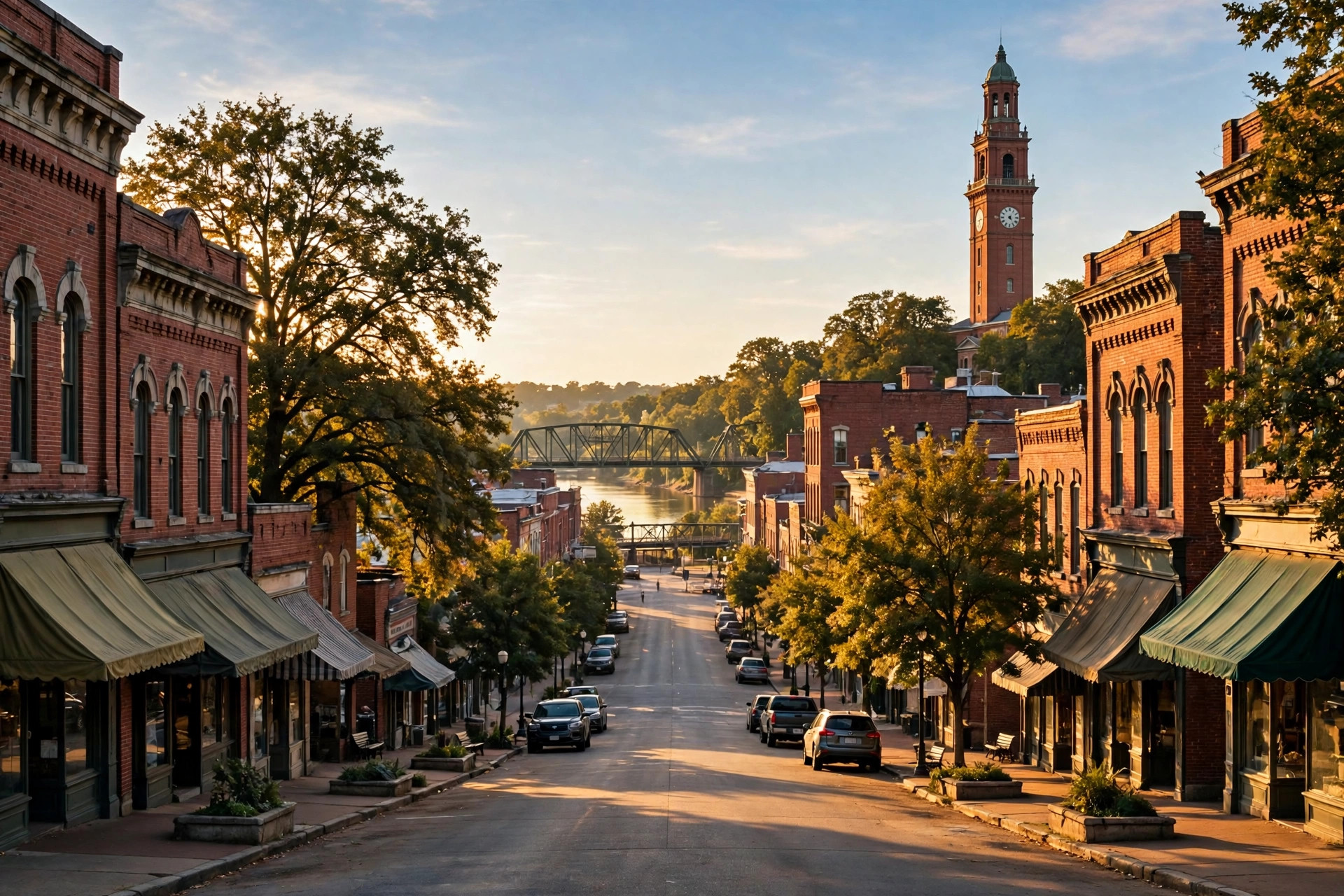
Key Takeaways
- Rome is the county seat of Floyd County and the largest city in Northwest Georgia: 38,934 people on July 1, 2025, per the Census Bureau's Vintage 2025 estimates — up 2.7 percent from the 2020 Census count of 37,713, because the city keeps adding housing and redevelopment along its corridors. Floyd County held 101,378 people, the 27th largest of Georgia's 159 counties. Median household income in the city is $54,435, against $65,565 for the county and $77,353 statewide, and the median home value is $234,300 with median gross rent of $1,032. Rome sits about 70 miles northwest of Atlanta and about 55 miles south of Chattanooga, at the confluence of the Etowah and Oostanaula rivers, which together form the Coosa River.
- The economy runs on four pillars. Healthcare is the biggest: Atrium Health Floyd employs more than 3,500 people and runs the 304-bed Floyd Medical Center, the regional referral hospital for Northwest Georgia, alongside AdventHealth Redmond, a 230-bed hospital and Level III trauma center, and the Harbin Clinic physician group, which merged into Atrium Health Floyd in April 2024. The second pillar is manufacturing: Pirelli's tire plant at 100 Pirelli Drive — its first American plant, opened in 2002, and one of its twelve research and development centers worldwide — employs 234 Georgians today and is the site of a $1.2 billion expansion announced in September 2026 that will add 1,000 jobs, with bulk hiring starting in 2029; Suzuki Manufacturing of America builds KingQuad ATVs here with about 200 employees, turning out more than 120 a day. The third pillar is higher education: Berry College, with 2,484 students on a 27,000-acre campus — the largest contiguous college campus in the world — plus Georgia Highlands College with about 5,400 students and Shorter University with about 1,300, for nearly 14,000 students across the city. The fourth is the sports-and-events economy: the Rome Emperors, the Atlanta Braves' High-A affiliate, drew 70,442 fans to AdventHealth Stadium in 2025, and the city's tourism office tracked $25.96 million in sports, groups, and events impact in its 2025 annual report, led by tennis and pickleball at 47 percent. Floyd County counts 2,128 employer establishments and 39,783 jobs with a $2.07 billion annual payroll, and Rome's own retail sales reached $1.42 billion in 2022.
- The calendar is a baseball season, three academic calendars, a tennis and events season, and a manufacturing expansion, stacked on a steady hospital and factory payroll base. The Rome Emperors play about 66 home games a season at AdventHealth Stadium from April through September, so restaurants, hotels, and shops near the ballpark and the Forum River Center spike on game nights and go quiet on road trips. Berry College, Georgia Highlands College, and Shorter University move student and family spending in August and again at graduation in May and December, and go quiet in the summer. The tennis calendar — the USTA Southern Tri-Level Tennis Championships and the year-round tournament schedule at the Rome Tennis Center — plus the Wings Over North Georgia Air Show and the fall film festival pack hotels and restaurants in bursts. And the Pirelli expansion adds its own clock: construction work ramps up from 2027, with the bulk of the 1,000 new hires arriving from 2029 and full operations in 2033. A restaurant on Broad Street that shows only an Emperors-season summer is showing the funder a fiction; show the twelve-month pattern, the quiet January weeks, and the plan for them. A line of credit fits the gaps between the big months better than a fixed daily debit that keeps pulling on a quiet week.
- Floyd County is a Tier 2 county in the Georgia Department of Community Affairs' 2026 Job Tax Credit rankings — ranked 101st of the 159 counties — which means an eligible business creating 10 or more net new full-time jobs earns a $2,500-per-job-per-year credit for five years, offsetting up to 50 percent of state income tax liability. That is a meaningfully better tier than metro Atlanta's, so a Rome business hiring at scale should price it in. The sharper local tools are the free help: the University of Georgia Small Business Development Center keeps its Rome office at 901 N Broad Street NE — (706) 622-2006 — serving thirteen Northwest Georgia counties with free consulting on business plans, financial analysis, and loan-submission preparation, and the Rome Floyd Chamber of Commerce at 1 Riverside Parkway is the county's business channel for networking, advocacy, and connections to the county's incentive programs.
- Georgia is one of the few states where the disclosure ask has the law behind it. Since January 1, 2024, Georgia's commercial financing disclosure law (Senate Bill 90) has required providers of covered commercial financings of $500,000 or less to disclose, before the deal closes, the total funds provided, the total funds disbursed, the total amount to be paid, the total dollar cost, the payment schedule, and any prepayment costs or discounts. No APR is required, and the law is enforced by the Georgia Attorney General. The public money that actually exists is state-level: Georgia's State Small Business Credit Initiative (SSBCI 2.0), run by the Department of Community Affairs, supports loans that approved lenders make to owner-occupied small businesses with 500 or fewer employees, and the University of Georgia Small Business Development Center offers free help preparing a business plan and documents. What does not exist is a general state cash grant for an ordinary for-profit business — so do not plan a closing date around grant money that is not there.
Why Rome borrows differently
Rome was named for its hills, and that is the first thing to understand about its funding market. The city was incorporated on December 20, 1834, on former Cherokee territory at the confluence of the Etowah and the Oostanaula rivers, which together form the Coosa River. The founders — Colonel Daniel R. Mitchell, Colonel Zacharia Hargrove, Major Philip Hemphill, Colonel William Smith, and John Lumpkin — drew the name from a hat, and Mitchell's submission won because the town is built on seven hills with the rivers running between them: Blossom, Jackson, Lumpkin, Mount Aventine, Myrtle, Old Shorter, and Neely Hill, the last of which is also called Clock Tower Hill, after the water tank built there in 1871. The Chieftains House, the home of Cherokee leader Major Ridge, still stands as a museum. During the Civil War the city was defended in April 1863 by Confederate General Nathan Bedford Forrest, then occupied in 1864 as part of General Sherman's Atlanta Campaign, and three forts were built on the riverbanks to try to hold it. The historic core still shows all of it: Broad Street's brick storefronts, the clock tower on Neely Hill, the Forum River Center on the Oostanaula, and the rivers themselves, which have flooded the town more than once — a fact any business near the water should know before it signs a lease. A funder should read the address, not just the city name: a restaurant on Broad Street, a medical practice off the Floyd Medical Center campus, a machine shop supplying the Pirelli plant, a contractor working the subdivisions on the north side, and a hotel near the ballpark are five different files.
The economy runs on four pillars, and the healthcare pillar is the one that shapes the most files. The first is medicine. Atrium Health Floyd is Floyd County's largest employer, with more than 3,500 employees, anchored by Floyd Medical Center — a 304-bed full-service acute care hospital and regional referral center on Turner McCall Boulevard — plus a 53-bed behavioral health facility in Rome and hospitals in Centre, Alabama and Cedartown, Georgia. In April 2024 the system absorbed Harbin Clinic, the region's large physician group, so the employed-physician footprint now runs across the whole market. The second hospital, AdventHealth Redmond, is a 230-bed medical, surgical, and rehab facility and a Level III trauma center that joined AdventHealth on October 1, 2021. Around both sits a dense network of physician and dental practices, imaging centers, physical therapy clinics, home-care agencies, medical suppliers, and staffing firms that live on hospital work, and their files are contract files: signed orders, credentialing, and payment cycles measured in weeks, not card-terminal deposits. The second pillar is manufacturing. Pirelli located its United States headquarters and first American manufacturing plant in Rome in 2002, at 100 Pirelli Drive, and the plant is one of the company's twelve research and development centers worldwide; it makes ultra-high-performance P Zero and Scorpion tires, and in 2021 it became the first tire factory in the world certified by the Forest Stewardship Council for sustainably sourced natural rubber and rayon. Today it employs 234 Georgians and turns out about 450,000 tires a year — and on September 22, 2026, Governor Brian Kemp announced a $1.2 billion expansion that will add 1,000 jobs in two phases, first robotized production, then a traditional line, with the bulk of hiring starting in 2029 and full operations in 2033, lifting output toward six million tires a year. Next to it, Suzuki Manufacturing of America has built KingQuad all-terrain vehicles in Rome since 2001, on a 35-acre plant, with about 200 employees producing more than 120 machines a day. Around both sits a ring of suppliers and service businesses — F and P Georgia stamping and welding auto parts, Neaton Rome making airbags and steering wheels, VT Industries making laminate countertops, Integrated Fiber Solutions making carpet and automotive yarn, plus Mohawk Industries, International Paper, and the Kellanova food plant that traces to the historic Keebler operation — and a Lowe's distribution center and Walmart rounding out the job base. The third pillar is education. Berry College, founded in 1902, enrolls 2,484 students — 2,254 undergraduates and 230 graduate students — on a 27,000-acre campus that is the largest contiguous college campus in the world, and Georgia Highlands College enrolls about 5,400 students while Shorter University enrolls about 1,300, with Georgia Northwestern Technical College's Floyd County Campus adding workforce training; together the city's colleges hold nearly 14,000 students. The fourth pillar is the sports-and-events economy: the Rome Emperors, the Atlanta Braves' High-A affiliate in the South Atlantic League, play at AdventHealth Stadium and drew 70,442 fans in 2025, and the city's tourism office tracked $25.96 million in sports, groups, and events impact in its 2025 annual report — tennis and pickleball at 47 percent, the Forum River Center at 21 percent, general sports at 18 percent — anchored by the Wings Over North Georgia Air Show, the USTA Southern Tri-Level Tennis Championships, and the Georgia Elite Classic. Retail sales in the city hit $1.42 billion in 2022, accommodation and food services sales reached $267.3 million, and healthcare receipts reached $1.60 billion.
The second thing to understand is that Rome is a working city in a lower-income county, and the funding demand reflects that honestly. The city itself held 38,934 people in July 2025 — up 2.7 percent from the 2020 Census count of 37,713 — but the county around it held 101,378, and the nearest big metros are Atlanta, about 70 miles southeast, and Chattanooga, about 55 miles north. Median household income in the city is $54,435, per the 2020-2024 American Community Survey, against $65,565 for Floyd County and $77,353 for Georgia as a whole — the city is more mixed-income than the county, with 20.6 percent of residents below the poverty line, 28.4 percent of adults holding a bachelor's degree or higher, and 1,501 veterans among the residents, and a mean commute of 21.7 minutes. A borrower may bank, hire, and sell across all of Floyd County and the surrounding Northwest Georgia counties, serving clients in Cartersville, Calhoun, Cedartown, and Dalton from a Rome address. Do not let anyone quote you a Rome business count; the Census Bureau publishes no city-level count of employer establishments at all, and the ZIP-level counts that circulate include areas outside the city limits. The county numbers are the honest ones: 2,128 employer establishments, 39,783 jobs, a $2.07 billion annual payroll, and 8,719 nonemployer establishments — the one-person businesses, the side hustles, and the freelancers that make up the long tail of the Rome economy. Commercial-data firm MMCG puts county output at $5.69 billion in 2024.
The third anchor is the calendar itself — and in Rome the calendar is a baseball season, three academic calendars, a tennis and events season, and a manufacturing expansion, stacked on a steady payroll base. The Emperors play about 66 home games at AdventHealth Stadium from April into September, so the restaurants, hotels, and shops near the ballpark and the Forum River Center spike on game nights and go quiet on the road trips. Berry College, Georgia Highlands College, and Shorter University move student and family spending in August and again at graduation in May and December, and the summer term is quieter. The tennis calendar runs year-round at the Rome Tennis Center, with the USTA Southern Tri-Level championships and other tournaments filling hotels in bursts, and the Wings Over North Georgia Air Show and the fall film festival do the same. The Pirelli expansion adds a construction clock of its own: site work ramps up from 2027, the bulk of the 1,000 new hires arrive from 2029, and full operations land in 2033 — which means contractors, suppliers, staffing firms, and service businesses near the plant have a multi-year runway to plan against, not a single season. And underneath it all, the two hospitals and the factories run on shift schedules and contract cycles that do not take a season off, which is why the town never fully empties. There is no single month when the town shuts down, and that steadiness is exactly what funders like — but a restaurant or retailer that shows only an Emperors-season summer is still showing the funder a fiction. Show the twelve-month pattern, the quiet January weeks, and the plan for them. A line of credit fits the gaps between the big months better than a fixed daily debit that keeps pulling on a quiet week. A machine shop waiting on a tire-plant supplier's Net 60 payment is a different file from one chasing spot work — and the purchase order, not the card terminal, is the asset to borrow against.
The Rome funding map: which product fits which business
Funding is not one product. The right one depends on what the money is for, how fast it comes back, and what your revenue looks like month to month. Here is the map for Rome:
Merchant cash advance — for card-heavy businesses with a short-term gap. Restaurants on Broad Street and near the Forum River Center, retailers serving a 38,934-person city inside a 101,378-person county, hotels and shops near AdventHealth Stadium that ride the Emperors season and the year-round tennis calendar, and service firms with steady card sales borrow against future receipts and repay daily or weekly as a share of sales. A $50,000 advance at an illustrative 1.20 factor rate repays $60,000 in total — $10,000 of cost — or about $2,308 a week over 26 weeks. The advance is fast, usually funded in 24 to 72 hours, and it fits a payroll gap or an inventory buy that pays back in a season. It is the most expensive money on this map, and it is the right call only when the money comes back within months. Read what actually happens if you default on an advance before you sign one, and read whether a merchant cash advance is legal for the state-by-state picture.
Term loan — for a known cost with a fixed payoff date. A second location on Broad Street or out on Turner McCall Boulevard, a build-out in a new ground-floor space downtown, a hire that pays for itself over a year, a down payment on a small warehouse in the West Rome industrial area, a delivery fleet for a caterer chasing the wedding season at the Forum River Center, a second truck for a contractor working the Pirelli expansion or the subdivisions on the north side. Fixed daily, weekly, or monthly payments over months to years, priced on a rate or a factor depending on the lender. If the spend has a clear return date, match the term to it — borrowing for 12 months to pay for something that returns in three is overpaying for speed you do not need.
Business line of credit — for the lumpy-revenue business. A machine shop bridging the months between a tire-plant supplier's Net 60 invoice and the check, a caterer bridging the weeks between a spring wedding weekend and the next big event, a retailer bridging the quiet weeks after the tennis season ends, a medical supplier bridging the gap between the hospital system's payment cycle and payroll draws only what it needs and pays interest only on what it draws. The line is the right tool when the gap is timing — a signed order 60 days out, a hospital invoice 45 days out, a wedding-season booking 90 days out — rather than a single purchase. Draws after approval are usually same-day. In a town where the business calendar runs on the baseball season, three academic calendars, the tennis season, and a manufacturing expansion, the line of credit is the product that fits the calendar best.
Equipment financing — for the thing itself. A kitchen line and POS system for a Broad Street restaurant, a CNC machine or press for a machine shop supplying the Pirelli or Suzuki plants, imaging or exam-room equipment for a medical or dental practice near the hospital, vans and tools for a contractor, salon chairs and stations for a beauty business, refrigeration for a specialty grocer. The equipment secures the loan, so the pricing is usually the cheapest money on this map for an asset purchase, and the term can run two to five years. If the money buys a thing, price the equipment product first. And if you already own the equipment outright, you can borrow against it instead — an equipment refinance or sale-leaseback turns a paid-off machine or truck fleet into working capital without taking it out of service.
Purchase-order and invoice financing — for the contract economy. A machine shop with a signed order from a Pirelli or Suzuki supplier, a supplier with a signed order from the hospital system, a staffing firm placing nurses or technicians at Floyd Medical Center or AdventHealth Redmond, a contractor waiting on Net 60 payment from a corporate client, or a logistics firm with a signed freight contract can borrow against the order or the receivable instead of against future card sales. The advance is sized on the contract, not on last month's deposits, which is exactly the profile a contract business needs. Rome has more of these businesses per capita than most cities its size — and the two hospitals, the tire plant, and the ATV plant concentrate them — so ask about it before you take a general-purpose advance.
SBA and guaranteed loans — for the cheapest money, if you can wait. SBA 7(a) loans run up to $5 million through SBA lenders, and SBA 504 loans run up to $5 million for owner-occupied real estate and long-life equipment. SBA microloans run up to $50,000. The underwriting is real and the clock runs in weeks, sometimes six to eight, but the rate is the lowest on this map. Rome borrowers are no strangers to the program: 40 SBA 7(a) approvals worth $35.5 million have gone to borrowers here since fiscal 2020. For the full comparison method, see which funding product fits which business.
Grants and loan programs: what actually exists in Rome
Before you borrow, check the money that does not need repaying — and be honest about what is open right now. The public money that actually exists for Rome businesses is state-level, run through the Georgia Department of Community Affairs and the University of Georgia, plus free advising and a local channel that is genuinely local. The University of Georgia Small Business Development Center keeps its Rome office at 901 N Broad Street NE — (706) 622-2006 — providing confidential, no-cost counseling to new and established businesses across thirteen Northwest Georgia counties: Bartow, Catoosa, Chattooga, Dade, Fannin, Floyd, Gilmer, Gordon, Murray, Paulding, Pickens, Walker, and Whitfield — covering business planning, access to capital, financial analysis, marketing, and preparation of loan submissions. It does not lend money, and that is the point: start there before you apply anywhere else, because it costs nothing and it is the fastest way to a fundable file. The Rome Floyd Chamber of Commerce, at 1 Riverside Parkway, is the county's business channel — networking, advocacy, and connections to the county's incentive programs — and the Rome-Floyd County Development Authority works property-tax relief and closing support for projects that bring jobs. And if your business is in Atlanta, Athens, Macon, Savannah, Columbus, Valdosta, Gainesville, Warner Robins, Augusta, Roswell, Marietta, Chattanooga, or Dallas, the same kind of state programs apply across the region — the difference is the local channel, not the idea: free advising first, then the money.
The state channel with the clearest terms is Georgia's State Small Business Credit Initiative (SSBCI 2.0), run by the Department of Community Affairs. It supports loans that approved lenders make to owner-occupied small businesses with 500 or fewer employees. It is a credit-support program beside a lender's loan, not a grant — but for a Rome business that is close to bankable, state support in the file is what gets it closed. Alongside it, SBA microloans run up to $50,000, averaging about $13,000 with terms up to 6 years, through local nonprofit intermediaries. And Rome has a tax-credit line worth knowing about precisely because it is better than most: Floyd County is a Tier 2 county in the Department of Community Affairs' 2026 Job Tax Credit rankings, ranked 101st of the 159 counties, which means an eligible business creating 10 or more net new full-time jobs earns a $2,500-per-job-per-year credit for five years, offsetting up to 50 percent of state income tax liability. That is real money at hiring scale — $25,000 a year for a ten-person hire, for five years — and the 10-job threshold is low enough that a growing manufacturer or professional-services firm can actually reach it. If you are hiring at scale, talk to the SBDC about the credit before you talk to a lender.
The sharper local tool is the one tied to hiring quality rather than county rank. The Quality Jobs Tax Credit pays $2,500 to $5,000 per job per year for five years for companies that create at least 50 jobs in twelve months where each job pays at least 110 percent of the county average wage. None of these is a grant, and none of them pays next Friday's payroll — they are tax credits claimed on a return, for jobs that already exist. But for a manufacturer or professional-services firm choosing between a Rome site and one across the county line, the credit plus the hospital and college talent pool is the number that can decide it.
One honest note about Georgia specifically: there is no general state cash grant for an ordinary for-profit business. The state's active channels are loans, tax credits, and free advising — each with an application, a review, and a wait. A business that needs payroll next Friday should not plan on grant money that does not exist.
One more honest note about Rome specifically: the expensive part of doing business here is not the cost base — it is the customer base. The median home value is $234,300 and median gross rent is $1,032, which means staff housing is affordable, commercial rents on Broad Street are lower than in metro Atlanta, and a restaurant or retailer carries a lighter fixed cost than the same business would in the city. The trade-off is that the customer base is thinner and more price-sensitive: one in five residents lives below the poverty line, and discretionary spending is the first thing a household cuts when the economy wobbles. A caterer living off one wedding season, a retailer living off one affluent neighborhood, or a machine shop with one tire-plant supplier at 60 percent of revenue is a different file from ten customers at 6 percent each. Bring the contract, the payment history, and the plan for a second customer.
What to watch before you sign
There is no substitute for the total repayment in dollars, in writing, before you sign. Compare offers on that number, not on the headline rate or the monthly payment. If a funder will not put the total in writing, that is your answer about the funder. In Georgia, the law is on your side of that ask — and it is new. Since January 1, 2024, Georgia's commercial financing disclosure law (Senate Bill 90) has required providers of covered commercial financings of $500,000 or less to disclose, before the deal closes, the total funds provided, the total funds disbursed, the total amount to be paid, the total dollar cost, the payment schedule, and any prepayment costs or discounts. The law does not require an APR, and it is enforced by the Georgia Attorney General, with civil penalties of $500 per violation up to $20,000. Get the disclosure in writing anyway, and slow down if it does not come.
The second thing to watch is the repayment rhythm — and in Rome the rhythm is a baseball season, three academic calendars, a tennis season, and a manufacturing expansion. Daily debits against a caterer's account in a quiet January week, when the tennis calendar is thin and the Emperors are months from opening day, or against a machine shop's account while a tire-plant supplier's Net 60 invoice is still 45 days out, can drain the account before the next settlement or the next payroll lands. If your revenue arrives in lumps, ask for weekly payments instead of daily, and ask what happens if a debit fails. A funder that answers clearly is a funder that has done this before.
The third is concentration. Rome's pillars are deep — two hospitals under two systems, one tire plant about to quintuple its workforce, three colleges, one ballpark — and your business may be far more concentrated than the town is. A machine shop with one tire-plant supplier, a staffing firm with one hospital contract, a caterer living off one wedding season, or a retailer living off one college's move-in weekend at 60 percent of revenue is a different file from ten customers at 6 percent each. Bring the contract, the payment history, and the plan for a second customer. A file that explains the concentration prices better than a file that leaves the funder to discover it.
The fourth is stacking. A second advance taken to cover the first one's payments is how a manageable file becomes a default. If you already hold an advance, read how to refinance one before you stack another, and read how the early-payoff discount works if you are weighing paying one off early.
Frequently asked questions
How fast can a Rome business get funded? A merchant cash advance typically funds in 24 to 72 hours after approval with three months of bank statements. Term loans run a similar clock, lines of credit decide in minutes to a day, equipment financing takes days to a couple of weeks, and SBA loans take weeks. The public programs run slower, because they move through review rounds and community-lender underwriting — and SSBCI 2.0 runs through its own application and underwriting, so do not plan a closing date around it. See same-day MCA funding for what same-day really means, and the MCA approval timeline for the step-by-step clock.
What do I need to apply? Three months of business bank statements are the core document. A photo ID and a voided check are usually optional verification, not requirements — but having them ready removes stalls. Emperors-season businesses should also bring the twelve-month pattern showing the April-to-September spike and the quiet winter weeks, plus booking and catering records; machine shops and suppliers should bring the signed purchase orders and the receivables aging; medical suppliers should bring the signed orders and the hospital payment history; contractors should bring the signed jobs and the payment schedule. See how much business loan you can get for how funders size the offer from those statements.
Does the Emperors season help my approval chances? It helps, if the file shows it honestly. Funders underwrite your business, not the headline. A restaurant, hotel, or retailer with twelve months of deposits showing a strong Emperors season plus steady work from a 101,378-person county prices far better than a file that shows only the good weeks — but ballpark revenue is lumpy revenue, so show the contracts, the payment history, and the twelve-month pattern, not just the summer numbers.
Can a restaurant, retailer, medical practice, contractor, machine shop, professional-services firm, or franchise get funded in Rome? Yes — restaurants, retailers, medical and dental practices, contractors, machine shops, professional-services firms, and franchises are among the most common Rome profiles, because the two hospitals, the tire plant, the colleges, and the ballpark keep them busy most of the year. An advance fits a short-term payroll or inventory gap; a line of credit fits the gaps between the baseball season or the wait on a tire-plant supplier's invoice; equipment financing is usually the cheapest route for a kitchen, a machine, a truck, or a van; and an SBA loan can fill a gap a bank will not cover on its own. See business funding for restaurants, business funding for retail stores, business funding for medical practices, business funding for dental practices, business loans for contractors, business funding for salons and beauty businesses, business funding for hotels and hospitality, business funding for franchises, and business funding for ecommerce for the profile-by-profile detail.
What if my revenue depends on one big customer? Say so up front, and show the concentration honestly. Funders price concentration risk — one customer at 60 percent of revenue is a different file from ten customers at 6 percent each — but a signed multi-year contract with a creditworthy buyer is also a strength. Bring the contract, the payment history, and the plan for a second customer. A file that explains the concentration prices better than a file that leaves the funder to discover it. And if you are still weighing the advance against a loan, read merchant cash advance vs. business loan before you apply.
Ready to fund your Rome business?
One application, competing offers, total cost in writing. Bank statements are the main document — gather three months before you start, and bring the full twelve months if your revenue follows the baseball season, the academic calendars, the tennis season, or the Pirelli expansion, or the signed orders and client contracts if you are a machine shop, a contractor, a medical supplier, or a staffing firm.
Apply Now or call (352) 809-3201
Ready to Get Funded?
Apply now and get a funding decision within hours. No hard credit pull for pre-approval — see your options risk-free.